Why Data Centers Matter
Nobody ever thinks about data centers. Well, that isn’t quite true, IT administrators probably think about data centers a lot. Beyond them, though, it is easy to understand why data centers have not occupied space in most people’s minds. The cloud, after all, is to most of us nebulous (pun intended), despite the very real physical location of the servers that comprise it. However, data centers have begun to draw more public attention recently, in particular in relation to AI; and they should, given that’s where all of our data lives. The explosion of data center construction is estimated to severely strain our power grids, increasing electricity costs for everyone, whether you store your data there or not, so it is good to see this issue getting attention. Push-back against the AI data centers is a good start, but it need not stop there - we should all be advocating for serious change in this important, but often overlooked part of the Internet.
Data centers are important because he who controls the data center ultimately controls the information stored there. Dumping your data into the cloud is convenient, and easy, so we rarely consider the negative implications. The pre-cloud model of having to buy and maintain your own backups relied heavily on the user to regularly, and securely, back up their data, be that photos, company records, or personal financial information. Of course, relying on the user runs the serious risk that users will forget, or fail to back up the data, and lose everything. We trust the cloud because it reduces the burden on us – but what does that freedom lose us?
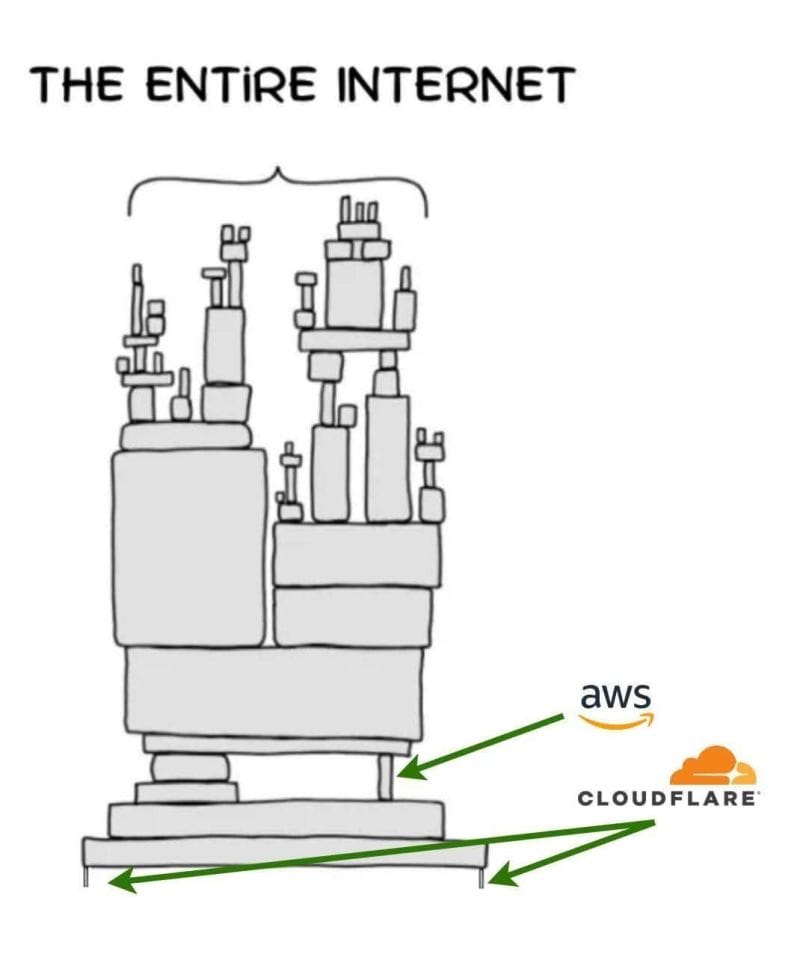
While the privacy and security of your data should be, on paper, guaranteed by the service provider (usually in that long, long Terms of Service document that we never read), be that provider Amazon, Google, or Microsoft (there are others, but let’s be honest – at this point its just one of the three of them, either directly or indirectly), the ownership of the data center infrastructure matters when it comes to protecting and defending our data rights online.
While hackers will often target the service provider themselves, it is not unheard of for an attack to target a specific data center. If social engineering remains the most common way to get unauthorized access to a system (humans are commonly referred to as the weakest link in cyber security), why not target the data center’s employees specifically, who daily interact with the infrastructure that hosts hundreds, or thousands, of companies’ data. Good security policy says that all data should be stored in at least two discrete physical locations, but how do we, the average user, know that if a data center falls victim to such an attack, or burns down in a fire, that the companies in charge engaged in good security policy, and our data isn't lost forever?
Unfortunately, we don’t have much choice these days but to trust the companies storing our data for us, despite the above risks, as well as the increasing risk that any stored data might be used for AI training against our wishes. This makes it increasingly important to apply continuous pressure to these companies to ensure that the incentives for security remain high (higher, specifically, than the benefit they might gain from violating our privacy), so companies (both data center owners and service providers alike) don’t shirk their responsibilities when it comes to data security and privacy.
Data center regulation has also come to occupy key space in the climate debate. The various environmental impacts include the above-mentioned rise in energy costs and the strain on power grids, as well as explosion of new data center construction and potentially water use. What isn’t up for debate, though, is the corporate maxim: Lower costs mean more profit. In efforts to save money, data center owners and builders will always choose the cheapest options that they can, that allow for the highest profit – while this itself is generally the cause of the “enshittification” of many technology products over the last decade or more, this is specifically probably why xAI is running its Memphis, TN data center using methane turbines, which are both unquestionably bad for the environment, and almost certainly contributing to negative health effects for residents living close by. There have been other reports by residents living close to new data centers of noise and other health effects, again likely a result of cost cutting; these companies will choose the cheapest insulation, the cheapest noise dampening materials that they can to save a buck or two, even if this means destroying the lives of nearby residents – largely black and brown communities – in some way.
The obvious question to ask is: “What is the alternative?” There are multiple solutions that would all benefit users over the ever inflating tech giants. Mainly, severely increased regulations, and ultimately, a shift towards making the Internet and its infrastructure a public utility, like electricity or water, given the necessity of being online in the 21st century. Unfortunately, this isn’t likely in the short, or probably medium terms, but another solution exists that is doable by anyone, even you, reader. This solution is to return to that old way of doing things – host your own backups – but with some modern conveniences that bring a lower learning curve and (relatively) low cost of entry to decrease the risk of human error making your data disappear.
An old computer can be set up as a home “server” for a variety of things, including as a network attached storage (NAS) server. If you prefer an out-of-the-box solution, though, companies like Synology, UGREEN, and others make pre-configured, easy to set up, storage devices for the same purpose. Ultimately, though, the solution can be as simple as the following: Grab an external hard drive (which can be had for as low as $50 or less, depending on how much data you have stored in the cloud), and dump everything you used to keep in cloud storage onto that (and make sure you set a reminder to back up regularly).
A little goes a long way to ensure you retain access to and control of your data. While it will cost money up front (unless you do have an old computer lying around with enough storage for your needs), the difference in cost long term might be surprising. Companies hosting your data will forever continue to bump up the costs of their services (especially as they seek ways to fund all of this new data center construction), but you don’t have to keep paying apple $5, now $10, now $15 per month ad infinitum. Lest we forget that if the AI bubble pops, who knows what will happen to all of this data center construction, and potentially the data stored inside these centers. Setting up your own backups pays for itself, potentially in less than a year (though, even if it takes a few years for it to pay, the peace of mind is a win on its own).
On our resources page, you will find a section dedicated to reclaiming ownership of your data, including some how-to’s, recommendations, and other reading on how to reduce your reliance on services that can change on a whim and leave you stranded. This also applies to your media streaming (music, TV, movies) – creating your own media storage server, and buying your own media, is another critical component of returning control of your data to you, something we’ll write more about in future articles. Fight back against big tech however you can; Oppose new data center construction near you, take back control of your data, and eliminate the power they have over your life.